The Intrauterine Contraceptive Coil, (IUCD) more commonly known as the coil, is a form of contraception which involves inserting a device into the entrance of the womb via the cervix.
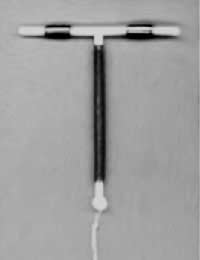
Modern versions of the coil are comprised of a T-shaped structure that are made of plastic and often a copper coil, with the T arms being inserted into the uterus. From the bottom of the coil into the vagina are two very fine threads that allow for ease of removal.Please note that the T arms are flexible and will fold down while being inserted.
The coil works by preventing the sperm from being able to enter the uterus, and in the event that one does, makes the inside of the womb inhospitable thus preventing a fertilised egg from being able to implant and develop.The coil can also change the amount of secretions from the cervix which can act as a further barrier to the sperm.
Contraceptive cover is provided immediately after insertion.One type of coil called the Mirena has the added benefit of containing hormones that can be absorbed into the bloodstream. This benefit can help to lighten periods and menstrual cramps and can also prevent ovulation.
Is it Safe?
If the coil is inserted by a fully trained professional then they are safe to use. There is a small chance that a hole could be put inside the womb, known as a perforation but this risk is small. If the person had an underlying infection, using the coil may cause this infection to inflame which is why some clinics now recommend screening for any sexually transmitted infections (STIs) before insertion. Some of the more common STIs can lay dormant with no symptoms for a long while.
Many doctors have found that it is easier to insert the coil in a patient who has had a baby in the past as the cervix is not as tightly shut.
The Benefits of Using the Coil
Using the coil removes the need for taking a pill everyday and is suitable for those who want longer term contraception.Modern coils are designed to have a life span of a maximum of eight years, though it is common to have them changed every five years.If a woman decides to start a family sooner than this, it can be removed and normal fertility will resume almost immediately.The coil has been shown to be at least 98% effective.
Disadvantages of Using the Coil
Occasionally the coil can cause periods to become heavier and last for longer so may be unsuitable for women with a history of anaemia or who is already bothered by having prolonged painful periods. However, the advent of the Mirena coil can help to solve these problems.
Some patients have said that they have experienced lower abdominal pain following insertion but this can be overcome by rest, hot water bottles and some paracetamol.Some women have also said that their sexual partner has been able to feel the threads in the vagina but this is not common.
The coil is an effective form of contraception that has been around for many years. Fortunately, modern versions are a lot safer and have a better design and insertion method than previous models. Check out other forms of contraception, in this section.
Related Articles in the 'Contraception' Category...
What was the IUD made of in 2001? I was led to believe that mine was removed in 2006,but I don't think it was.... I am currently being tested for hemochromatosis and various other conditions and it now has occurred to me that this could be a possibility! I'm 43 and haven't had a period in over 12 months and I'm scared, if I'm honest. Any advice (not judgement please) would be really appreciated.
Higgy - 1-Jul @ 4:14 PM
@Julia. Thanks..do let us know how you get on.
FemaleHealthIssues - 13-May @ 11:43 AM
I was told the coil would put weight on me, a friend of mine put on 4 stone. had it removed and had to have a tummy tuck. Oh!! that wont happen to me I said:) well! up too now I have put on 1stone.2ib. :( In 2 months, So I have decided to become supper healthy brown rice, fish, vegetables. I don't want to but more weight on, but to have the periods I did there is no way I will have this removed so I am bearing with it for another 7months,I am going to start walking exercise and less alcohol. lets see what happens. Doctors say "oh it makes you eat more" that's why you put more weight on. well I wasn't eating more and the weight was a stone in two month. So lets see how I go with a new diet and see if there right. So many people seem to put weight on than loose it and it does not make sense its the lowest form of the pill ? anyway for some people it is do I don't I. do you mind putting weight on, if your having periods from hell that totally take over your life (which mine did) if I can find a way to still have it in and loose weight I will be back on here to let you all know how I did it.
julia - 7-May @ 4:52 PM
@Vicki. Many people do use the mirena coil very successfully. There is nothing to stop you requesting its removal if you decide that it is not for you. Speak to your family planning nurse who will talk you through any questions and also any other options that might be feasible.
FemaleHealthIssues - 10-Oct @ 1:33 PM
ive been having periods every two wks since giving birth to my twins 7 yrs ago after many scans and tests they refuse to give me a full hysterectomy as im only 35 they want me to have this mirena coil fitted while taking an ssri im not convinced by wht im hearing theres a lot of bad stories dont know what to do ?
vicki - 9-Oct @ 5:23 PM
hi I had a coil fitted 2months ago and I started feeling sick on Thursday but it was a week after me and my partner done something I took a pregnancy test on Friday it came back negative I am worried because since I have been on it I haven't been feeling sick then since me and my partner done it a week ago then I started feeling sick and my breast is sore when I touch it I don't know what to do can someone please help me
lala - 25-May @ 9:43 PM
I have been feeling sick for the last 4-5 weeks and it's getting a lot worse. I am getting close to being sick. I had the coil put in nearly 2 weeks ago. I did take a pregnancy test around 3 weeks ago, and got a positive. The week after I took a few and got negatives. Could I be pregnant?
ems - 22-Mar @ 9:08 PM
Im having the coil fitted tomorrow due to my consistnt 8month period. Im pretty nervous as its my last option before surgery. I have been advised to tke time off work. How painful is getting it and how long does the pain last.
Arrrrrrrrr - 6-Jan @ 9:03 PM
I can feel my wife's coil with my finger and whilst making love. which is painful to me.
Is this normal and what can we do about it?
Paul - 23-Dec @ 3:33 PM
I had the coil inserted one year ago. Apart from feeling low from time to timein the initial two months it has been fine. Now I find myself thinking that I may be pregnant, I have yet to do a pregnancy test. My question is if the coil can cause damage to an unborn child? If so what damage?
Wondering - 29-Sep @ 10:26 PM
I had the coil put in after my last child and shes 6now
how long does the coil last?
I still have it inserted. This is now the 7th year
lem - 11-Feb @ 5:38 AM
I had the marina coil fitted 11 months ago about 7weeks after having my daughter , been really ill the past few weeks been to doctors to av it check out , they took out all sorts of tests ,pregnancy test came bk negative ,internal scans and told me I had a few cysts , constant bleeding for around 7 weeks which they gave me pills for ,the constant pain I was in the gave painkillers , they also checked the marina coil to make sure it was still in place , 2 weeks ago I became really sick and light headed so took a pregnancy test myself and guess wot I'm pregnant, I've been to doctors to find out how this could happen as they've tested everything and internal scan and found nothing , they told me I'm a rare case , rare or not I had it fitted to avoid getting pregnant , they offered me a termanation under the nhs but I had a week to decided as I was 11 weeks gone , yet they can't give the answer if this coil could of affected my unborn as they had to remove the coil and told me I was likely to miscarry but no miscarriage , now I'm told I'm out of danger of miscarriage , but no can give me a answer to if the hormone in the coil can affect my unborn
Nickie - 6-Feb @ 8:01 PM
I had the coil put in on the 10th june 2010,I've been having some stomach pain and savior back pain in from one monthI won't have it removed! Any advice?
sunny - 10-Sep @ 7:18 PM
Iv had the coil in a dew months now but after 2weeks of coming of a period, I get loads of pain in my hips & abdominal area and feel bloated.. Do you think this is related? X
melissa - 29-Aug @ 6:46 PM
Hiya, I'm thinking about having a coil fitted. I've been told so many different things though. I read that it makes your periods heavier, more painful, you put on weight and have more pain in general.Then speaking to people having had them say they dont even have periods anymore, no weight gain and no pain.So confused, can anyone shed some light?????Many Thanks
Jacqui - 16-Aug @ 12:33 PM
I have had the coil in for about 2 weeks and I have had a lot of pain almost like contrations and I have started bleeding heavily and when I got it put in it was very painful I don't no if that is normal
steff - 1-Apr @ 9:14 PM
I had the coil put in on the 16th march, I had it put in when I had a hysterscopy and ever since my belly has been bloated to the extent where I look pregnant.. I've been having pains ever since I have had it in .. But cause am terrified of needles I won't have it removed! Any advice?
kat - 26-Mar @ 7:21 AM
Hey ladies, I have been using it 4 the last 3yrs and it's perfect, only with some abdominal pain.
jacky - 8-Oct @ 8:19 PM
I have a coil and have been using it since 2001 up to now2011 but i want it removed,will i feel pain because of all this years?true coiladds weight.
wabob - 15-Jun @ 12:46 PM
I had the coil in for a year and a half I did think it was good for protecting from falling pregnant but I started to get awful headaches and cramps and had to get it removed. Since getting it out I feel alot better but not all people experience this so don't let it put you off. I also found I put a bit of weight on.
nikki - 14-May @ 5:49 PM
The coil has been great so far, I have had it in for a year and it's coming up to the time to get it checked, do you have to be on your period when you get it checked just because it has to be put in when you are it has me confused.
intrested - 27-Mar @ 11:35 PM
Can the coil make you put on weight because ever since I got it in I have put up some weight and I have been watching what I have been eating and dont eat fatty foods.
Shan Re: Tummy Tucks Explained
I have been living with my stretch mark scars from pregnancy for 7-8 years, I had my first adorable son when I was 16. I believe that’s why…
11 May 2020
Mummy Re: What is Squamous Metaplasia?
Sir/ Madam Rcently i went for Anti Mullenrian Hormone Test and the report says metaplastic squamous cells seen . what is this…
1 October 2019
Folami Re: Benefits Of Evening Primrose Oil
Please I have been trying to conceive for a while, but to no avail I was told to work on my hormonal imbalance, that is why I…
5 June 2019
abhinavayu Re: All About Varicose Veins
What a great article! I can tell you really care about what you are writing about, which is a rare thing these days. Thank you for…
31 July 2018
FemaleHealthIssues Re: What is Squamous Metaplasia?
Happy - Your Question:My smear show squamous metaplasia and reactive cellular change with inflammation.what it means??
7 March 2018
Happy Re: What is Squamous Metaplasia?
My smear show squamous metaplasia and reactive cellular change with inflammation....what it means??
6 March 2018
FemaleHealthIssues Re: What is Squamous Metaplasia?
Genie - Your Question:I undergone D&c last Jan. 6 and my histopath result was Chronic Cervicitis with squamous metaplasia. I had…
13 February 2018
Genie Re: What is Squamous Metaplasia?
I undergone D&c last Jan. 6 and my histopath result was Chronic Cervicitis with squamous metaplasia. I had on and off very light…
Rose Re: What is Squamous Metaplasia?
I just recently had my biopsy result from a liquid-based pap smear test & the result is: acute & chronic cervicitis with squamous…


Re: Tummy Tucks Explained
I have been living with my stretch mark scars from pregnancy for 7-8 years, I had my first adorable son when I was 16. I believe that’s why…
Re: What is Squamous Metaplasia?
Sir/ Madam Rcently i went for Anti Mullenrian Hormone Test and the report says metaplastic squamous cells seen . what is this…
Re: Benefits Of Evening Primrose Oil
Please I have been trying to conceive for a while, but to no avail I was told to work on my hormonal imbalance, that is why I…
Re: All About Varicose Veins
What a great article! I can tell you really care about what you are writing about, which is a rare thing these days. Thank you for…
Re: What is Squamous Metaplasia?
Happy - Your Question:My smear show squamous metaplasia and reactive cellular change with inflammation.what it means??
Re: What is Squamous Metaplasia?
My smear show squamous metaplasia and reactive cellular change with inflammation....what it means??
Re: What is Squamous Metaplasia?
Genie - Your Question:I undergone D&c last Jan. 6 and my histopath result was Chronic Cervicitis with squamous metaplasia. I had…
Re: What is Squamous Metaplasia?
I undergone D&c last Jan. 6 and my histopath result was Chronic Cervicitis with squamous metaplasia. I had on and off very light…
Re: What is Squamous Metaplasia?
My biopsy report says squamous metaplasia...what is the meaning?
Re: What is Squamous Metaplasia?
I just recently had my biopsy result from a liquid-based pap smear test & the result is: acute & chronic cervicitis with squamous…